


You invest heavily in premium supplements, yet see minimal results. The culprit often isn’t the product quality but poor absorption. Your body may only utilize 20-50% of the nutrients you consume. This guide reveals evidence-based strategies to dramatically enhance supplement uptake, accelerating recovery and performance.
Table of Contents
- Prerequisites: What You Need Before Starting
- Step 1: Timing Your Supplements Strategically
- Step 2: Digestive Preparation And Health Optimization
- Step 3: Pairing Supplements With Food For Better Absorption
- Step 4: Avoiding Absorption Inhibitors
- Troubleshooting Common Absorption Mistakes
- Expected Outcomes And Measurable Results
- Safety Considerations And Warnings
- Explore ElevateSupplements For Optimized Performance
Key Takeaways
| Point | Details |
|---|---|
| Strategic timing and food pairing can double absorption rates compared to random intake | Proper meal combinations enhance fat-soluble vitamin uptake by 30-100% |
| Hydration and digestive enzymes drastically improve nutrient bioavailability | Enzymes can boost macronutrient absorption by up to 15% |
| Calcium and iron compete when taken together, reducing both by half | Separate these minerals by at least 2 hours to prevent absorption loss |
| Optimized supplement protocols deliver 20-30% performance gains within weeks | Most athletes notice faster recovery and strength improvements in 4-6 weeks |
| Poor timing causes GI discomfort in 30% of users | Proper strategies reduce side effects whilst maximizing results |
Prerequisites: What You Need Before Starting
Before diving into absorption strategies, understand what you’re working with. Different supplement categories absorb through distinct pathways. Vitamins and minerals utilize specific transporters in your intestinal lining. Proteins break down into amino acids before absorption. Botanicals and herbs often require enzymatic conversion.
Assess your digestive health honestly. Do you experience bloating, irregular bowel movements, or discomfort after meals? These signal potential absorption barriers. Your gut microbiome plays a crucial role in nutrient uptake. Consider getting a basic digestive health assessment or tracking your symptoms for a week.
Gather essential tools for success:
- Access to balanced meals containing adequate fats and proteins throughout the day
- A reliable water bottle to track hydration goals of at least 2-3 litres daily
- Quality digestive enzyme or probiotic supplements if gut health is compromised
- A simple supplement journal or phone app to track timing and response
- Knowledge of your training schedule to align supplement intake with workouts
Your kitchen setup matters too. Keep healthy fat sources like nuts, avocados, and olive oil readily available. These pair perfectly with fat-soluble vitamins. Stock protein-rich foods for optimal amino acid supplement timing. Preparation eliminates the guesswork when it’s time to dose.
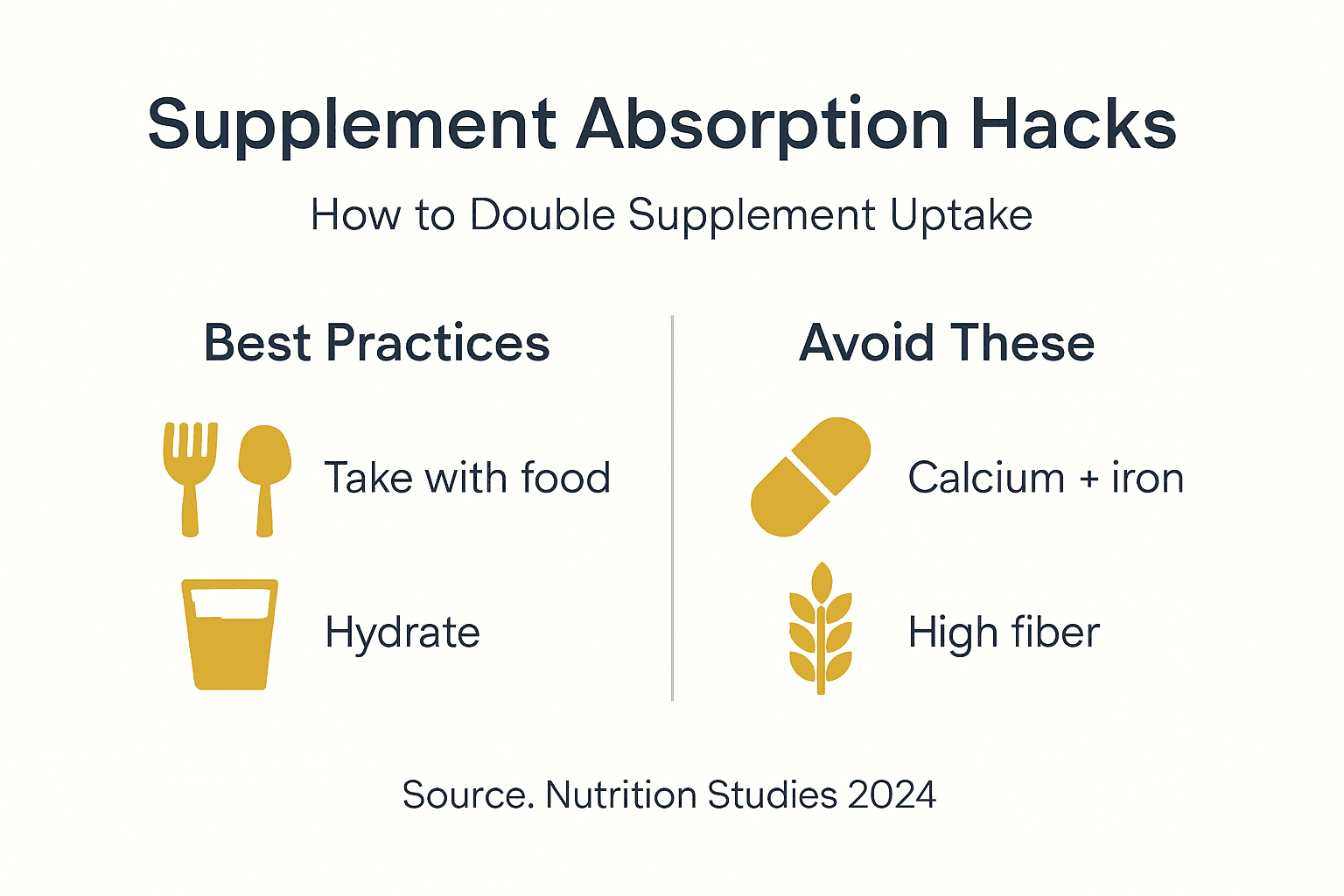
Step 1: Timing Your Supplements Strategically
When you take supplements matters as much as what you take. Your body’s absorption capacity fluctuates throughout the day based on hormonal cycles, digestive enzyme production, and metabolic state.
Protein supplements absorbed best immediately post-workout for maximum muscle synthesis. The 30-60 minute anabolic window optimizes amino acid uptake when muscles are primed for repair. Miss this window and you sacrifice significant gains.
Fat-soluble vitamins A, D, E, and K require dietary fat for absorption. Take these with your largest meal containing at least 10 grams of healthy fats. Morning or midday works best for most people. Avoid late-night dosing unless that’s when you consume substantial fats.
Stimulants and fat burners demand careful timing. Never dose these past 2pm if you value quality sleep. Late-day intake disrupts circadian rhythms, impairing recovery and ironically reducing the next day’s nutrient absorption. Your body recovers and rebuilds during deep sleep.
Mineral timing requires strategic separation:
- Take calcium supplements away from iron by at least 2 hours to prevent competitive inhibition
- Magnesium works best in the evening, promoting relaxation and better sleep quality
- Zinc on an empty stomach maximizes absorption but may cause nausea in sensitive individuals
- Iron first thing in the morning on an empty stomach unless GI issues arise
Create a daily supplement schedule aligned with your routine. Write it down or set phone reminders initially. Consistency compounds results. Pro Tip: Use a weekly pill organizer divided by time of day to eliminate decision fatigue and ensure proper spacing.
When you stack supplements safely, timing prevents interactions whilst maximizing individual benefits. Review your complete supplement list and choose supplements for peak performance based on your specific training goals and schedule.
Step 2: Digestive Preparation and Health Optimization
Your gut is the gatekeeper of nutrient absorption. Even premium supplements fail without proper digestive function. Start with hydration, the most overlooked absorption factor. Water facilitates every stage of digestion and nutrient transport across intestinal membranes.

Aim for 35ml per kilogram of bodyweight daily, increasing during training. Dehydration thickens digestive fluids, slowing enzyme activity and nutrient breakdown. Sip water consistently rather than chugging large amounts that flush through your system.
Digestive enzyme supplements improve macronutrient absorption by up to 15%, particularly beneficial if you consume large protein doses or have compromised digestion. These supplements contain proteases for protein, lipases for fats, and amylases for carbohydrates. Take them immediately before meals for maximum effect.
Your gut microbiome determines how efficiently you extract nutrients. Probiotic supplementation enhances absorption of vitamins like B12 and folate by 10-15%. Beneficial bacteria also produce short-chain fatty acids that improve intestinal health and nutrient transport.
Consider these digestive optimization strategies:
- Add a quality probiotic containing at least 10 billion CFUs of diverse strains
- Include digestive enzyme supplements with meals high in protein or fat
- Chew thoroughly to mechanically break down food and trigger enzyme release
- Avoid drinking excessive liquids during meals which dilute digestive enzymes
- Manage stress through breathing exercises as chronic stress impairs digestion
Iron presents unique challenges. Taking iron on an empty stomach increases absorption but may cause GI discomfort in 30% of users. If you experience nausea or cramping, take iron with a small amount of vitamin C-rich food like orange slices. The vitamin C enhances absorption whilst food buffers gastric irritation.
Pro Tip: Start new digestive supplements at half dose for the first week. This allows your system to adapt without overwhelming side effects. Gradually increase to full therapeutic dose once tolerated.
Step 3: Pairing Supplements with Food for Better Absorption
Strategic food combinations transform supplement efficacy. The right pairings can double bioavailability compared to taking supplements with water alone.
Fat-soluble vitamins absorption increases 30-100% when taken with meals containing 5-10 grams of fat. These vitamins dissolve in fat, forming micelles that intestinal cells readily absorb. Without adequate fat, they pass through largely unused.
Simple fat pairings that work:
- Add a tablespoon of olive oil to your salad when taking vitamin D
- Consume vitamin E with a handful of almonds or walnuts
- Take vitamin A alongside fatty fish like salmon or mackerel
- Pair vitamin K2 with cheese, egg yolks, or avocado
Bioavailability enhancers supercharge absorption beyond basic food pairing. Piperine from black pepper increases curcumin absorption by up to 2000%. Many quality turmeric supplements include this naturally. Quercetin enhances absorption of various polyphenols and antioxidants.
Avoid absorption inhibitors during supplement intake. Phytates in whole grains and legumes bind minerals, preventing absorption. Tannins in tea and coffee similarly interfere. If you must have coffee, separate it from mineral supplements by at least an hour.
| Supplement Type | Optimal Food Pairing | Absorption Boost |
|---|---|---|
| Fat-Soluble Vitamins (A, D, E, K) | Meals with 10g+ healthy fats | 30-100% |
| Protein Powders | Immediately post-workout alone or with simple carbs | 20-40% |
| Iron | Vitamin C-rich foods, avoid calcium | 50-200% |
| Calcium | Spread throughout day with meals, away from iron | 30-50% |
| Curcumin | Black pepper (piperine) and fats | 2000%+ |
| Omega-3s | With any meal containing fats | 25-50% |
Balance is critical. Whilst fat enhances certain vitamins, excessive fat slows gastric emptying and delays some nutrient absorption. Aim for moderate, balanced meals rather than extremely high-fat combinations. Your body absorbs nutrients best from varied, whole-food meals.
Step 4: Avoiding Absorption Inhibitors
Common supplement and food interactions sabotage even perfect timing and pairing. Taking calcium and iron supplements simultaneously can reduce absorption of both by up to 50%. These minerals compete for the same intestinal transporters. When taken together, neither absorbs efficiently.
Separation is your solution. Space calcium and iron by at least two hours. Take iron first thing in the morning, calcium with lunch or dinner. This simple adjustment doubles the benefit you derive from both supplements.
Phytates and oxalates in plant foods bind minerals tightly. Spinach contains high oxalates that inhibit calcium absorption despite being calcium-rich. If taking mineral supplements, avoid pairing with:
- Whole grains and bran during the same meal
- Large servings of spinach, rhubarb, or beets high in oxalates
- Soy products containing phytates
- Tea or coffee within an hour of supplement intake
Caffeine deserves special attention. Whilst moderate amounts don’t significantly impact most vitamins, excessive caffeine increases calcium excretion through urine. If you consume multiple coffees daily, ensure adequate calcium intake and dose it away from peak caffeine times.
High fiber intake, whilst beneficial for health, can modulate absorption negatively if timed poorly. Fiber speeds intestinal transit, reducing contact time between nutrients and absorption sites. Don’t take supplements with fiber supplements or extremely high-fiber meals.
| Absorption Inhibitor | Affected Supplements | Solution |
|---|---|---|
| Calcium | Iron, zinc, magnesium | Separate by 2+ hours |
| Coffee/Tea Tannins | Iron, B vitamins | Take supplements 1 hour before or after |
| Phytates in Grains | Calcium, iron, zinc | Avoid pairing with whole grain meals |
| High Fiber Meals | Most supplements | Take with moderate-fiber meals instead |
| Alcohol | B vitamins, vitamin C, magnesium | Avoid alcohol near supplement timing |
Strategically stagger competing supplements throughout your day. Morning iron, midday magnesium, evening calcium creates optimal absorption windows for each. Track your routine for a week to identify unintentional conflicts.
Troubleshooting Common Absorption Mistakes
Even with knowledge, execution errors undermine results. Recognize these frequent pitfalls and implement fixes immediately.
-
Random supplement timing without meal coordination reduces absorption by 30-50%. Fix this by setting specific times tied to meals and workouts. Your phone calendar is your friend.
-
Ignoring hydration impairs every absorption pathway. Dehydration thickens mucus membranes and slows nutrient transport. Commit to drinking water first thing in the morning and before each meal.
-
Taking entire supplement stack at once causes competitive inhibition. Minerals fight for transporters, vitamins interfere with each other. Spread intake across at least three daily doses.
-
Neglecting digestive health whilst increasing supplement loads overwhelms your system. Address bloating, irregular bowels, or discomfort before adding more supplements. Quality over quantity always wins.
-
Expecting immediate results leads to premature changes. Nutrient status improves gradually over weeks. Stick with optimized protocols for at least 4-6 weeks before adjusting.
If supplements cause persistent GI distress, reduce doses temporarily. Your tolerance will build as digestive health improves. Some individuals need weeks to adapt to higher protein or mineral intake.
Pro Tip: Keep a simple supplement journal noting timing, food pairings, and how you feel. Patterns emerge quickly, revealing what works specifically for your body. Generic advice needs personal refinement.
Regularly review your entire supplement protocol quarterly. Your needs change with training intensity, diet modifications, and life stress. What worked brilliantly six months ago may need adjustment now.
Expected Outcomes and Measurable Results
Proper absorption strategies deliver tangible improvements you can measure and feel. Users report up to 30% faster recovery and performance improvement within 4-6 weeks of optimized absorption.
You’ll notice quicker post-workout recovery first. Muscles feel less sore, energy returns faster between sessions. This indicates improved amino acid and mineral uptake supporting repair processes.
Performance metrics improve next:
- Strength gains accelerate as protein synthesis optimizes
- Endurance extends with better energy substrate utilization
- Body composition shifts favourably with enhanced nutrient partitioning
- Mental clarity and focus sharpen from improved B vitamin and omega-3 absorption
Timed protein intake alone boosts muscle protein synthesis by 20% or more compared to random dosing. This compounds over months into significant lean mass differences. Your investment in supplements finally matches your training effort.
Digestive improvements manifest quickly. Bloating, gas, and discomfort reduce within 1-2 weeks of proper timing and enzyme use. This indicates your body is processing nutrients efficiently rather than struggling.
Track objective measures to validate progress. Monitor training performance through logged weights and reps. Measure body composition monthly. Note energy levels and recovery speed. These concrete data points confirm your optimized absorption protocol works.
Supplement efficacy improves by 20-30% with proper implementation. You extract more benefit from the same products, improving return on investment. Many athletes discover they need fewer total supplements once absorption optimizes.
Explore products like the metabolic booster 2.0 benefits which work synergistically with optimized absorption strategies to maximize energy and performance outcomes.
Safety Considerations and Warnings
Optimizing absorption amplifies both benefits and potential risks. Higher bioavailability means greater effect, requiring careful attention to dosing and timing.
Late-day stimulant intake causes sleep disturbances in 40% of users, impairing recovery and absorption. Never take fat burners, pre-workouts, or caffeine supplements past early afternoon.
Poor sleep sabotages every aspect of fitness. Growth hormone secretion, muscle repair, and metabolic regulation all occur during deep sleep. Disrupting this with late stimulants creates a vicious cycle of poor recovery and reduced nutrient utilization.
Improper mineral timing causes unnecessary GI discomfort. High-dose iron or magnesium on an empty stomach may trigger nausea, cramping, or diarrhea. Start with food and gradually work toward empty stomach dosing only if tolerated.
Excessive dosing risks toxicity, particularly with fat-soluble vitamins that accumulate in tissues. More isn’t better once you exceed therapeutic ranges. Vitamin A and D toxicity cause serious health issues. Stick to recommended doses unless supervised by healthcare professionals.
Critical warnings:
- Consult your doctor before combining multiple supplements if you take prescription medications
- Blood thinners interact with vitamin K, omega-3s, and various herbs
- Diabetes medications may need adjustment with supplements affecting blood sugar
- Never exceed label recommendations thinking better absorption justifies higher doses
Pregnant or nursing women require specialized supplement protocols. Many standard recommendations don’t apply. Always seek professional guidance during these critical periods.
If you experience unusual symptoms after optimizing absorption, reduce doses immediately. Headaches, digestive upset, or skin reactions may indicate you’re absorbing more than your body currently needs. Gradual increases allow adaptation.
Explore ElevateSupplements for Optimized Performance
Now that you understand absorption science, put it into practice with quality products designed for maximum bioavailability. ElevateSupplements offers precisely formulated supplements supporting your optimized intake strategy.
Our digestive enzyme complex provides comprehensive enzymatic support, ensuring you break down and absorb proteins, fats, and carbohydrates efficiently. Perfect for athletes consuming high protein diets or anyone with digestive concerns.
Maximize fat-soluble vitamin benefits with our D3+K2 vitamin supplements, specifically formulated for optimal absorption and synergistic bone and cardiovascular health. The K2 ensures calcium deposits in bones, not arteries.
Fuel post-workout recovery with premium whey protein powder designed for rapid absorption during your anabolic window. Combined with proper timing strategies from this guide, you’ll experience accelerated muscle growth and recovery.
Every product ships fast throughout the UK and Ireland with free delivery on orders over £100. Our 24/7 customer support team helps you choose the right supplements and optimize your stack. Start maximizing your supplement investment today.
FAQ
What are the best supplements to take on an empty stomach?
Iron, zinc, and certain amino acids absorb best on an empty stomach when gastric acid is concentrated. However, this may cause nausea in sensitive individuals. Start with food and transition to empty stomach dosing gradually if tolerated.
How long before or after a meal should I take my supplements?
Fat-soluble vitamins require meals with at least 5-10 grams of fat, so take them during your meal. Water-soluble vitamins work anytime but pair well with breakfast. Minerals like calcium and magnesium absorb best with food to minimize GI upset.
Can taking too many supplements at once reduce absorption?
Absolutely. Minerals compete for the same intestinal transporters, reducing absorption of all when taken simultaneously. Separate calcium from iron, zinc, and magnesium by at least 2 hours. Spread your supplement stack across 3-4 daily doses rather than one large dose.
Are there supplements that always require fat with meals?
Vitamins A, D, E, and K are fat-soluble and require dietary fat for absorption. Omega-3 fish oils also absorb better with fatty meals. Curcumin and CoQ10 are fat-soluble compounds needing fat for optimal bioavailability. Without adequate fat, absorption drops by 50-70%.
How can I tell if my body is absorbing supplements properly?
Monitor your recovery speed, energy levels, and training performance over 4-6 weeks. Blood tests can verify nutrient status for vitamins D, B12, and iron. Reduced GI discomfort indicates better digestion and absorption. If you see no improvements after 6 weeks of optimized protocols, consult a healthcare provider to assess underlying absorption issues.


